Humanoid Service Robots: An Explore Guide with Key Insights and Helpful Details
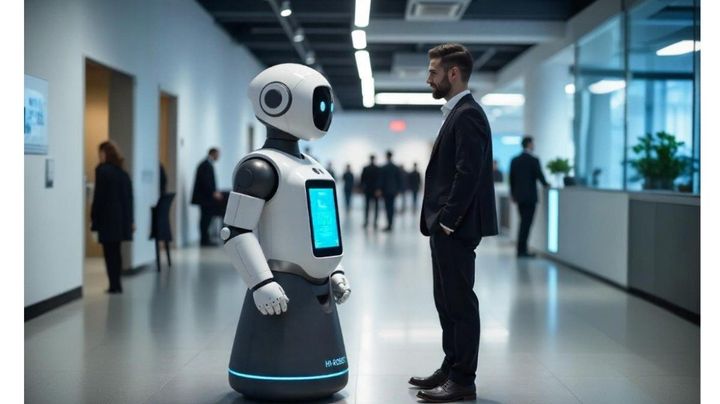
Humanoid robots are machines designed to resemble human form and movement, often equipped with sensors, artificial intelligence, and autonomous decision-making capabilities. Their development began decades ago with early mechanical prototypes, but modern advancements in robotics, computer vision, and machine learning have transformed them into capable systems that can interact, navigate, and respond in environments built for humans.
They exist because many real-world tasks require mobility, perception, or communication similar to what humans naturally perform. As technology continues to advance, humanoid robots are being developed to support tasks that involve interaction, guidance, monitoring, or assistance. Their design allows them to use tools, reach objects, and follow natural pathways, making them adaptable in areas where traditional robots may not function efficiently.
The growth of AI, machine learning, and robotics platforms has made humanoid robots more capable, responsive, and suitable for research, public engagement, and logistical support.
Importance – Why humanoid robots matter today
Humanoid robots hold importance because they provide new possibilities for environments where adaptable, reliable, and intelligent assistance is useful. Their value is especially visible in tasks that require consistent performance, physical capability, or the ability to interact naturally with people.
They matter today because:
-
They support tasks that are repetitive or physically demanding.
-
They can operate in settings where continuous monitoring is needed.
-
They help reduce exposure to risky conditions.
-
They contribute to research, advanced simulation, and robotics education.
Humanoid robots influence areas such as public infrastructure, learning environments, healthcare support, and customer-facing spaces. As global interest in automation increases, humanoid robotics has become part of discussions on digital transformation, intelligent systems, and future mobility.
High-value research keywords—such as AI automation systems, robotics technology trends, intelligent robotics solutions, future of AI robotics, and autonomous machine learning applications—reflect the rising demand for educational information about humanoid robot development.
Recent Updates – Key trends and developments shaping humanoid robotics
The landscape of humanoid robotics continues to evolve due to progress in sensors, AI capabilities, and mobility engineering. While specific timelines differ across research groups, several ongoing trends define the field.
-
Integration of advanced AI models
Robots now include multimodal AI that can interpret text, speech, images, gestures, and environmental cues at the same time, allowing natural interaction. -
Improved mobility and balance
Modern systems are designed with better actuators and lightweight materials that support stable walking, terrain adaptation, and smoother motion. -
Human-robot collaboration focus
Research emphasizes safe and predictable interactions, making robots better at understanding motion patterns and adjusting their responses. -
Wider adoption in public environments
Educational institutions, transport hubs, and research labs increasingly test humanoid robots for navigation support, information guidance, and social interaction. -
Enhanced perception technologies
Depth sensing, mapping algorithms, and vision-based recognition continue to strengthen robots' ability to understand surroundings.
These updates show how humanoid robots are becoming more reliable, more interactive, and better suited for everyday environments.
Laws or Policies – Regulations influencing humanoid robot development
Humanoid robots operate under broader regulatory frameworks that focus on artificial intelligence, safety standards, data protection, and responsible innovation. These policies guide how robots should behave, how they collect information, and how they are deployed in public spaces.
Key regulatory themes include:
-
AI governance principles
Most regions follow guidelines that promote transparency, accountability, and human oversight for intelligent systems, especially when robots make decisions or interact with people. -
Data protection rules
Robots equipped with cameras or microphones must follow privacy requirements, including consent, secure storage, and responsible processing of collected data. -
Robotics safety standards
International robotics safety frameworks outline physical interaction limits, motion safety, emergency controls, and operational boundaries. -
Ethical development programs
Many government-backed innovation programs support research while requiring responsible testing, public safety considerations, and ethical review processes. -
Deployment guidelines for public areas
Some countries require safety demonstrations, pilot evaluations, or operational reporting before humanoid robots can function in sensitive environments.
These policies encourage safe, ethical, and transparent use of humanoid robotics while allowing innovation to continue.
Tools and Resources – Helpful platforms for exploring humanoid robotics
Students, researchers, and technology enthusiasts use a variety of tools to understand, simulate, or design humanoid robotic systems. These tools contribute to learning, experimentation, and robotics development.
Simulation and Testing Tools
-
Gazebo – A physics-based simulation environment for testing robot movement and sensor integration.
-
NVIDIA Isaac Sim – A simulation platform that supports realistic environments and AI-driven robotics modeling.
-
Webots – An open-source simulator suitable for exploring humanoid robot activities and interaction patterns.
AI and Robotics Frameworks
-
ROS 2 (Robot Operating System) – A widely used framework for connecting sensors, actuators, and AI components.
-
OpenCV – A computer vision library for image recognition and gesture interpretation.
-
PyTorch and TensorFlow – Machine learning frameworks used for building perception and decision-making models.
Educational and Knowledge Resources
-
MIT OpenCourseWare – Robotics and AI lecture materials for foundational learning.
-
IEEE Xplore – Research papers covering robotics insights, AI studies, and advanced engineering concepts.
-
Robotics design databases – Collections of humanoid robot specifications and comparative features.
Analytical Tools
Those studying technology trends can benefit from AI trend dashboards, robotics insights platforms, and machine learning analytics tools, which help track advancements and compare technologies influencing humanoid robotics.
Example Comparison Table – Key attributes of humanoid robot systems
| Feature Category | Typical Capabilities | Relevance |
|---|---|---|
| Mobility | Walking, balancing, coordination | Enables navigation in human-designed spaces |
| Perception | Vision, audio sensing, mapping | Supports recognition and environment understanding |
| AI Reasoning | Adaptive responses, task planning | Helps robots operate independently |
| Safety Controls | Collision avoidance, emergency actions | Ensures safer interaction with people |
| Connectivity | Cloud-based updates, wireless systems | Expands AI capabilities and accessibility |
FAQs
1. What defines a humanoid robot?
A humanoid robot is designed with a human-like structure or movement pattern, enabling it to navigate environments built for people and interact through speech, gestures, or sensors.
2. Are humanoid robots capable of independent decision-making?
Most humanoid robots combine autonomous functions with programmed instructions. They can navigate and respond to common situations but may rely on predefined rules for complex or sensitive tasks.
3. Why do humanoid robots use advanced AI?
Advanced AI helps robots interpret visual cues, understand speech, plan motions, and adapt to new environments. This improves their ability to interact naturally and complete tasks more effectively.
4. Where are humanoid robots used?
They appear in research labs, public information areas, educational environments, and spaces where interactive guidance or consistent task execution is helpful.
5. What challenges do humanoid robots still face?
They continue to improve in areas such as long-term stability, natural communication, precise movement, and safe collaboration with humans. These challenges guide ongoing research.
Conclusion
Humanoid robots represent an important advancement in intelligent technology, shaped by innovations in AI, mobility engineering, and human-machine interaction research. Their purpose is to assist in environments created for people, offering adaptability, consistency, and the ability to engage naturally.
As research expands and robotics systems become more refined, humanoid robots are moving closer to practical applications in everyday environments. Policies, safety standards, and ethical frameworks continue to guide their development, ensuring responsible progress. With ongoing exploration and accessible tools, humanoid robotics remains a significant area of learning for those interested in the future of intelligent automation and robotics technology.